
Websites
Instagram vs website for local businesses: which one do you actually need?
Instagram can be brilliant for attention, personality, visuals, and staying present with followers. This guide helps local business owners decide what job Instagram should do, what information needs a clearer home, and when a simple owned page becomes useful.
Instagram can be brilliant for a local business.
For some independent businesses, it is the most alive part of their online presence. It shows the work. It shows the people behind the business. It shows what is new, what is available, what the place feels like, and whether anyone is paying attention.
If you run a nail studio, beauty room, salon, cafe, food business, independent shop, maker brand, artist page, or creative service, Instagram may not be an extra channel. It may be where a lot of the business happens.
So I do not think the useful question is:
"Instagram or website?"
The better question is:
"What job is Instagram doing, and what job still needs a clearer home?"
Because Instagram can be where people discover you, remember you, and get a feel for your personality.
A website, or even one simple owned page, can be where the important details stop moving around.
That is how I think about this when looking at real local businesses through WeGrow. The point is not to replace a working channel. The point is to make sure the customer does not have to piece the business together from scattered clues.
Quick answer: Instagram may be enough for some businesses
Practical answer
There are local businesses where Instagram can be enough for now.
If your customers already follow you, understand what you offer, know how to order or book, and do not need much explanation before taking the next step, you may not need to rush into a website.
For a very visual business, Instagram can do a lot of heavy lifting. It can show recent work better than a static page. It can make the business feel active. It can help people see taste, style, atmosphere, and personality quickly.
If you are early, very small, testing an offer, selling through DMs, or mainly using a marketplace like Etsy, the next best move might be to tidy the Instagram bio, update highlights, make the booking or shop link obvious, and keep posting work that real customers care about.
That is a valid answer.
If your question is broader than Instagram, start with whether a small local business needs a website in 2026.
The problem starts when Instagram is expected to do every job at once.
What Instagram is genuinely good at
Instagram is good at attention.
It helps people notice you when they are already browsing. It gives you a place to show work in progress, finished work, new stock, appointments, behind-the-scenes moments, seasonal updates, opening changes, offers, events, and the little human details that make a local business feel real.
It is also good for visual proof.
A beauty business can show fresh nails, brows, hair, skin results, treatment rooms, product shelves, and the style of the work. A cafe can show food, specials, the room, the counter, the staff, and the kind of day people might have there. A maker can show the craft, packaging, materials, finished pieces, and custom work.
That matters. For some businesses, a customer wants to feel the business before they read much about it.
Instagram is also familiar. People already know how to follow, reply, react, save, share, and send a DM. If your customers are active there, that can make conversation easy.
So the answer is not to replace Instagram. If it is working, keep it working.
The question is whether Instagram is also being asked to carry information it is not very good at holding still.
Where Instagram starts to break down
Instagram starts to break down when a new customer needs clarity.
A follower who already knows you may understand the business from months of posts, stories, and updates. A new person does not have that history. They arrive in the middle of the story.
They may be trying to work out:
- what you actually offer
- where you are based
- what area you cover
- whether prices or starting points are available
- how to book, enquire, visit, order, or ask a question
- whether you are open today
- whether you are right for their need
- whether you look trustworthy enough to contact
Some of that can go in the bio. Some can go in highlights. Some can go in pinned posts. Some can be answered in DMs.
But the more important the information is, the more risky it becomes to leave it scattered.
Posts move down the feed. Stories disappear. Highlights get outdated. Captions are not always read. DMs create repeated admin. Links are limited. Important proof can sit behind a scroll, a tap, or a guess.
That does not mean Instagram is bad. It means it was not designed to be the only calm, organised version of a business.
The problem with hiding important details
A lot of good local businesses have useful truth spread across too many places.
The price list is in an old story highlight. The opening hours are on Google, but the latest change was posted in a story. The location is in the bio, but the parking detail is in a caption from three months ago. The best customer proof is in comments, old reviews, tagged posts, or screenshots. The booking rule is explained only after someone sends a DM.
None of that is unusual. It happens because business owners are busy, and Instagram rewards fresh updates more than tidy information.
But from the customer's side, it can feel like work.
A person may like your work and still hesitate because they cannot quickly find the next step. They may not know whether to DM, call, use a booking link, visit, check a menu, ask for a quote, or wait for a reply.
That hesitation matters. Not because every visit should turn into an enquiry, and not because a website magically fixes everything. It matters because the business has already done the hard part of earning attention, but the useful details are not easy enough to act on.
The aim is not to make the business look bigger than it is.
The aim is to make the customer's next step less foggy.
Not every customer wants to use Instagram
There is another simple point that gets missed: not every customer wants to use Instagram.
Some people do not have an account. Some have one but rarely use it. Some browse without wanting to log in. Some dislike sending DMs to a business. Some are searching from Google, Maps, a referral message, a family WhatsApp chat, or a quick "what time are they open?" moment.
That matters for Cardiff and South Wales independents because local customers are not all the same.
A business may have younger customers who happily discover everything through Instagram, and older customers who prefer a phone number, address, opening hours, and a normal page they can read without working around an app.
A maker may have loyal Instagram followers, but gift buyers might arrive from a shared link and want the basics quickly. A local service business may get word-of-mouth referrals from people who are not active on social. A cafe or shop may be recommended in conversation, then searched for later by someone who just wants to know where it is and whether it is worth visiting.
If Instagram is the only serious online home, part of the audience may have to work harder than they should.
What a website or owned page adds
A website does not need to replace Instagram.
For many local businesses, the first useful version is much smaller than that. It is one clear place for the stable information.
That might include:
- what you do
- who it is for
- where you are or what area you cover
- opening hours or appointment expectations
- services, products, menus, treatments, or categories
- price ranges or starting points where useful
- photos that show the real business clearly
- reviews, awards, qualifications, or other trust signals
- FAQs that save repeated messages
- clear contact, booking, order, visit, or enquiry routes
Instagram can stay lively. The website can stay calm.
Instagram can show what happened this week. The owned page can explain what someone needs to know before they decide.
Instagram can build familiarity with followers. The owned page can help a referral, searcher, or new customer understand the business without scrolling through months of content.
That is the useful split.
Not "social media is bad".
Not "every business needs a huge website".
Just: put the information that should not keep moving somewhere it can be found.
A practical decision checklist
If you are deciding whether Instagram is enough, try this:
- Open your Instagram profile as if you have never seen the business before.
- Give yourself thirty seconds.
- Ask whether a new customer can understand what you offer, where you are, who it is for, and what to do next.
- Check whether your key details are current without relying on an old story, old caption, or a DM.
- Ask whether someone who does not use Instagram could still understand and contact the business.
Then choose the smallest useful next step.
Instagram may be enough for now if:
- your customers are active there and already understand how to buy, book, or enquire
- the offer is simple
- the bio link, location, contact route, and highlights are clear
- you are still testing the business or offer
- a bigger online presence would distract you from serving customers
You probably need an owned page or simple website if:
- customers keep asking the same basic questions
- services, prices, location, booking, or opening details are hard to find
- important proof is buried in posts, comments, highlights, or old stories
- people find you through referrals, Google, or passing trade, not just Instagram
- you want one link that is easy to send after a conversation
- you serve customers who may not be comfortable using social media
And you may need a fuller one-page website if:
- the business is established enough that clarity and trust matter before someone contacts you
- you want the page to feel more complete than a social profile
- you need your story, services, proof, FAQs, photos, and next step organised properly
- you want a structured page you can keep current yourself, without a blank-canvas website project or unnecessary design and maintenance decisions
The decision is not really "Instagram or website?"
It is:
"Where should each type of information live so customers do not have to guess?"
Where WeGrow fits
WeGrow is not here to tell every local business to abandon Instagram or buy a website.
That would be lazy advice.
For some businesses, the honest next step is no website yet. Keep using Instagram. Make the bio clearer. Update the highlights. Make the booking, shop, menu, address, or phone route obvious. Remove old confusing information. Put the answer to common questions somewhere people can actually find it.
For others, Local can be a useful professional home in its own right: one simple business page, free to keep, with direct contact details and the basics in one place. That can be enough when the business needs a clearer link for customers.
For businesses that need more room for their story and proof, Presence adds website sections and customer-action options. It keeps the scope focused: one page, built around clarity, trust, useful details, and the next step.
And if you are not sure which applies, see what WeGrow could look like for your business before creating an account.
That is the point.
Instagram can be brilliant for attention and personality.
But the details that help someone decide should not be hard to find, hard to trust, or trapped inside a scrolling feed.
For a lot of local businesses, Instagram is where people first notice you.
One clear owned page is where they can stop guessing.
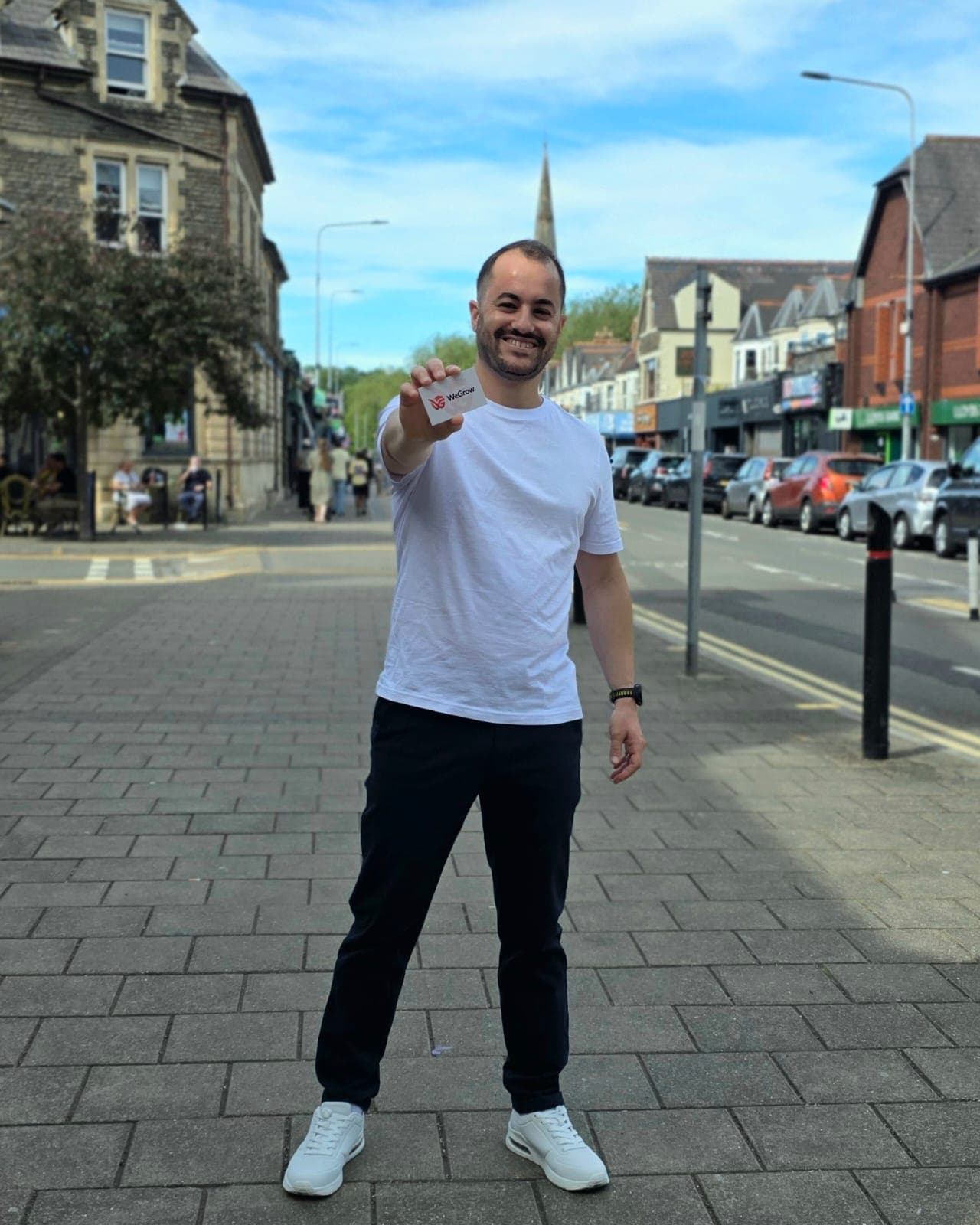
Jad El Omeiri is the founder of WeGrow. He has spent more than twelve years building digital products—from early-stage startups and marketplaces to ecommerce platforms used by millions of people. He now brings that experience into practical, founder-led work with independent businesses in Cardiff and beyond.