
Local visibility
What happened after we gave a Cardiff takeaway a free business page
Shawarma Laziz did not need a large website. It needed one useful place for accurate information and directions. This case study follows what happened over the next three months and what the experiment taught WeGrow about visit-first local businesses.
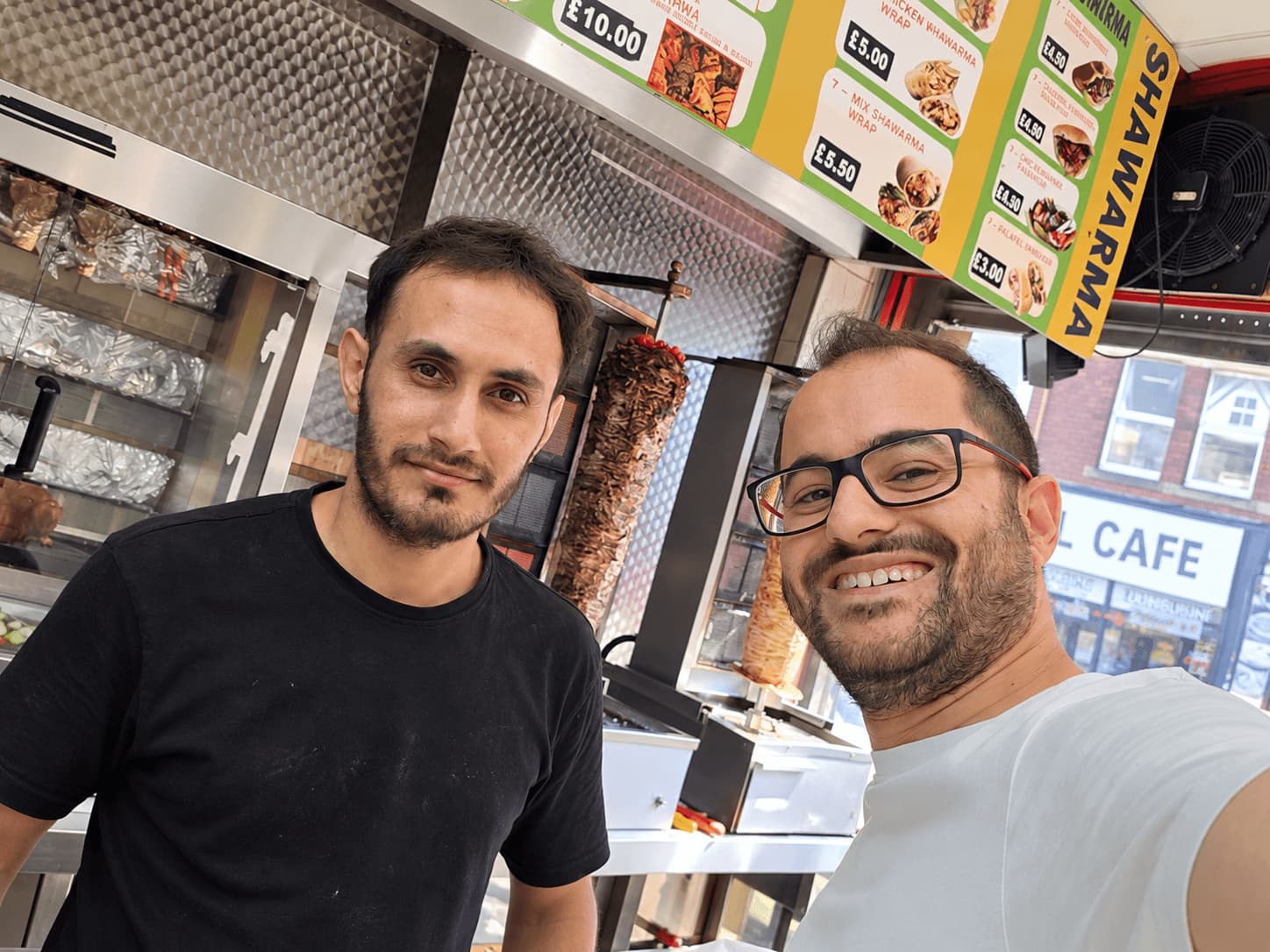
Shawarma Laziz was already a real, operating takeaway on City Road in Cardiff before WeGrow created anything for it.
It already had customers. It already had a Google presence. People could already search for the business and find some information about it.
What it did not have was one simple place of its own where someone could understand the essentials: what kind of food it serves, where it is, when it is open, whether the food is halal, whether you can eat in or take away, and how to get there.
That gap did not call for a large website.
Laziz does not take online bookings. It does not take phone orders. There was no ecommerce system to build, no customer account area to create and no complicated enquiry journey to design.
The useful next step was much smaller.
On 28 June 2026, I created a free WeGrow Local page for Shawarma Laziz. Google accepted that page as the website on the business's Google Business Profile on the same day.
Then I watched what happened.
Three months later, the story is more interesting than I expected.
Laziz helped clarify what a useful website actually means
A lot of website advice assumes that every business wants the same thing.
Add a contact form. Add a phone button. Capture an enquiry. Get someone into a sales funnel.
That makes sense for some businesses.
A plumber may want a customer to call. A beauty business may want someone to book. A coach may want an enquiry. A barber might want a phone call, WhatsApp message or walk-in.
Laziz is different.
It is primarily a visit-first business.
The useful customer journey is closer to:
Understand the place, check the practical details and decide whether to go there.
That meant opening hours, address, directions and clear information about the food mattered more than adding contact features the business does not actually use.
That distinction ended up influencing how I think about WeGrow more broadly.
The right customer action should follow the business.
For Laziz, that action is visiting. For another Local business it might be calling, messaging on WhatsApp, following a booking link, opening a menu or using another useful route.
The point is not to make every local business behave like the same website template.
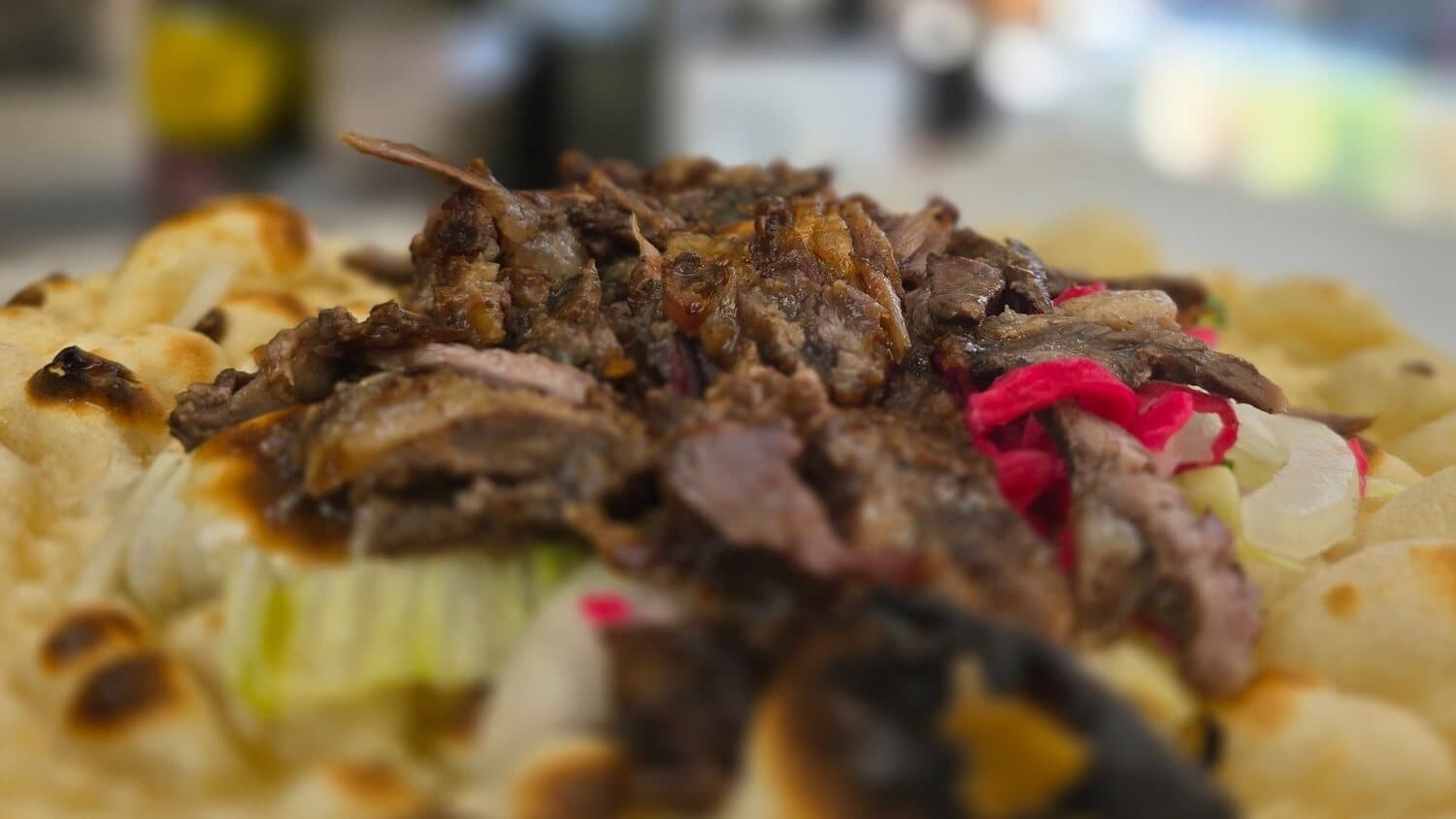
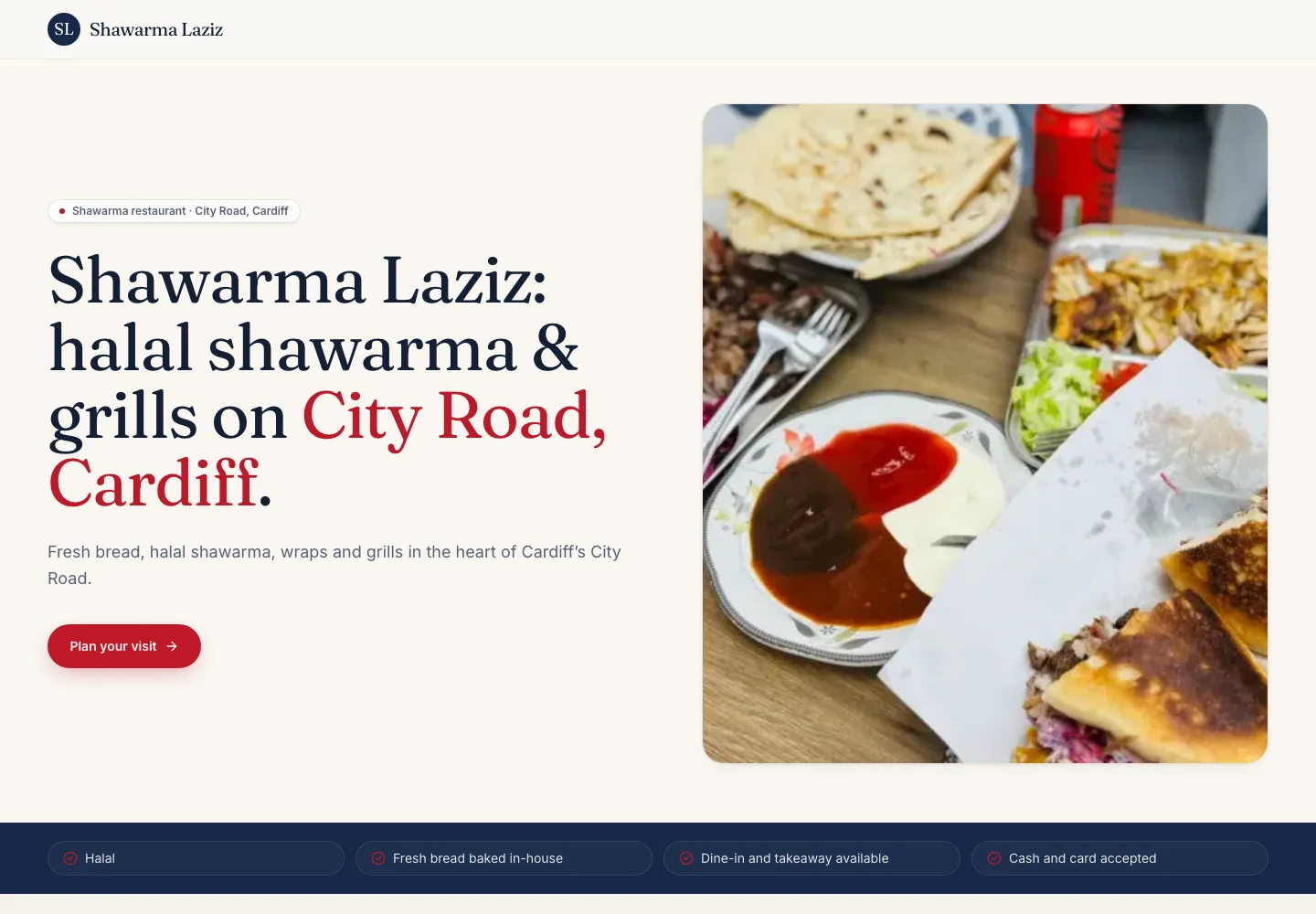
The page started as a very small intervention
The Laziz page did not try to replace everything else around the business.
It brought together the useful facts we could verify and presented them in a simple mobile-friendly page.
It also corrected a practical problem: the Monday opening hours that were showing online were wrong.
Once the page was live, it was connected to the place customers were already most likely to encounter Laziz online: Google.
That was the experiment.
Could something this small actually become useful?
Google Search started sending people to it
By 29 September 2026, Google Search Console had recorded 125 search clicks and 5,391 impressions for the Laziz page.
There is one slightly technical detail behind those figures.
WeGrow originally published Local pages under /local/. The product later moved to one canonical Business Site route under /sites/.
That means Laziz's search history is split across two addresses:
the historical /local/shawarma-laziz page recorded 60 clicks and 2,748 impressions, while the current /sites/shawarma-laziz page recorded 65 clicks and 2,643 impressions.
They are two URLs in Google's reporting, but they represent the same Laziz story across a product migration.
More interesting than the total is what happened over time.
The page recorded 4 search clicks in the partial few days of June after launch, 38 in July, 30 in August and 53 in September.
September was its strongest month so far.
That matters because one of the easiest ways to misread early website data is to mistake a launch spike for sustained usefulness.
That is not what happened here.
Three months after launch, people were still finding the page through Google, and the latest full month in the data produced the most search clicks.
People were not only searching for Shawarma Laziz
A lot of the search activity is exactly what you would expect.
People searched for things such as shawarma laziz, laziz shawarma, shawarma laziz cardiff and shawarma laziz menu.
That is useful in its own right.
Someone who already knows the business still needs a reliable destination when they search for it.
But Search Console also shows the page appearing — and receiving clicks — for searches where the person did not type the business name.
Examples in Google's visible query data include shawarma near me, shawarma cardiff, kebab shop near me, doner kebab near me, shawarma city road, kebab city road, city road food, city road restaurants, best shawarma cardiff and cardiff kebab.
I find that part particularly interesting.
It means the page was not only serving existing demand from people who already knew Laziz.
At least some people looking more generally for shawarma, kebabs and places to eat around Cardiff and City Road were also reaching it through search.
There is an important limitation here.
Google does not expose every individual search query in Search Console, so the visible query table is not a complete account of all 125 clicks. I would rather use those queries as examples of what happened than pretend we can reconstruct every search journey from the data.
But the broader pattern is clear enough: Laziz was being found through both branded and more general local-food searches.
Later, we started measuring useful actions too
When the Laziz page originally launched, Local did not record customer actions.
That changed on 30 August.
As WeGrow developed, I became increasingly convinced that a free Local page should do more than simply exist. It should give a customer a useful next step and give the owner some lightweight evidence that those routes are being used.
Since action tracking began on 30 August, the Laziz page has recorded 28 website-action events.
Twenty-three were activations of the practical/contact section and five were directions clicks.
Those numbers need to be interpreted carefully.
They are anonymous events, not 28 known people. An action on the contact section does not mean someone contacted the business. And five directions clicks do not prove five people walked into Laziz and bought food.
But directions are particularly meaningful in this case because of how the business works.
Laziz does not have a phone-order, booking or enquiry journey for the page to optimise.
The useful action is getting someone closer to the physical business.
Five recorded directions clicks therefore tell us something much more relevant than the absence of phone calls would.
The page is doing two different jobs
Looking at the search and action evidence together, I think the Laziz page is doing at least two useful things.
First, it gives people who already know Shawarma Laziz a clearer destination when they search for the business.
That matters more than it might sound.
Accurate hours, the right address, useful food information and directions can be the difference between somebody confidently deciding to visit and somebody being left piecing information together from different sources.
Second, the page has created another discovery surface for people who were not necessarily searching for Laziz by name.
The generic shawarma, kebab and City Road searches are evidence of that.
I would not turn that into a claim that WeGrow “does SEO” and automatically brings customers to every Local page.
Search visibility depends on far more than a website alone: the business itself, its location, existing Google presence, demand, competition and Google's systems all matter.
But I also do not think we should understate what happened.
A free page for a Cardiff takeaway accumulated more than five thousand Google Search impressions and 125 search clicks over its first few months, including clicks from searches that did not contain the business name.
That is real evidence of usefulness.
What this does not tell us
There are things the data cannot answer.
We do not know how many of those 125 search clicks became restaurant visits.
We do not know how many of the five directions clicks resulted in someone physically arriving at Laziz.
We cannot assign revenue to the page.
We cannot say that Laziz would not have appeared in Google without WeGrow, because its Business Profile and existing real-world presence also contribute to how Google understands the business.
And one business cannot tell us what will happen for every future Local site.
That is fine.
I would rather have modest evidence I can defend than a dramatic case study built from assumptions.
The interesting part is how little was required
One of my favourite things about this experiment is what we did not build.
Laziz did not need a large multi-page website.
It did not need a contact form.
It did not need online accounts, a booking system or custom ecommerce.
It did not need to become a different kind of business to fit the software.
The useful improvement was much simpler: take the things a customer actually needs, put them somewhere clear and credible, connect that page to where people are already searching, and make the next step obvious.
For Laziz, the next step is often simply:
Get directions and visit.
That sounds obvious now.
It was less obvious when I started WeGrow.
Laziz helped shape Local
The page in this case study was one of WeGrow's early founder-created experiments.
Today, Local has become a self-serve product.
A business owner can create their own Local site, manage their own information and publish it themselves. Local is free to create and free to keep.
The product is also broader than this one Laziz example.
A restaurant that takes bookings could add its booking link. A business with a phone number can make calling easy. Another might use WhatsApp, email, Instagram, a menu or another specific useful link.
The lesson from Laziz was not that every Local page should send people to Google Maps.
It was that the product should help each business make its real customer action clearer.
That principle now sits much closer to the centre of WeGrow than it did when I built this page in June.
Three months later
When I first created the Laziz page, the question was very small:
Can a free local business page actually get found?
We have enough evidence now to answer that for this business.
Yes.
But the more useful lesson is what happened afterwards.
People continued finding the page months after launch. Some arrived through searches for Laziz itself. Others found it while searching more generally for shawarma, kebabs and food around Cardiff. And once Local started recording useful customer actions, people used the page's directions route too.
That does not make the page responsible for every customer who walks through the door.
It does show that something small, accurate and useful can become a genuine part of how a local business exists online.
And that is much closer to what I want WeGrow Local to be.
Jad El Omeiri is the founder of WeGrow. He has spent more than twelve years building digital products—from early-stage startups and marketplaces to ecommerce platforms used by millions of people. He now brings that experience into practical, founder-led work with independent businesses in Cardiff and beyond.