
Local visibility
What can a local business website actually prove? Three months with Adam’s Barber Shop
Adam’s wanted more new people through the door. This case study follows three months of Google discovery, website actions, a real offer experiment and one unexpected offline story — while being honest about what analytics still cannot prove.
There is a question local business owners eventually ask that website analytics are surprisingly bad at answering:
How many actual customers did this bring me?
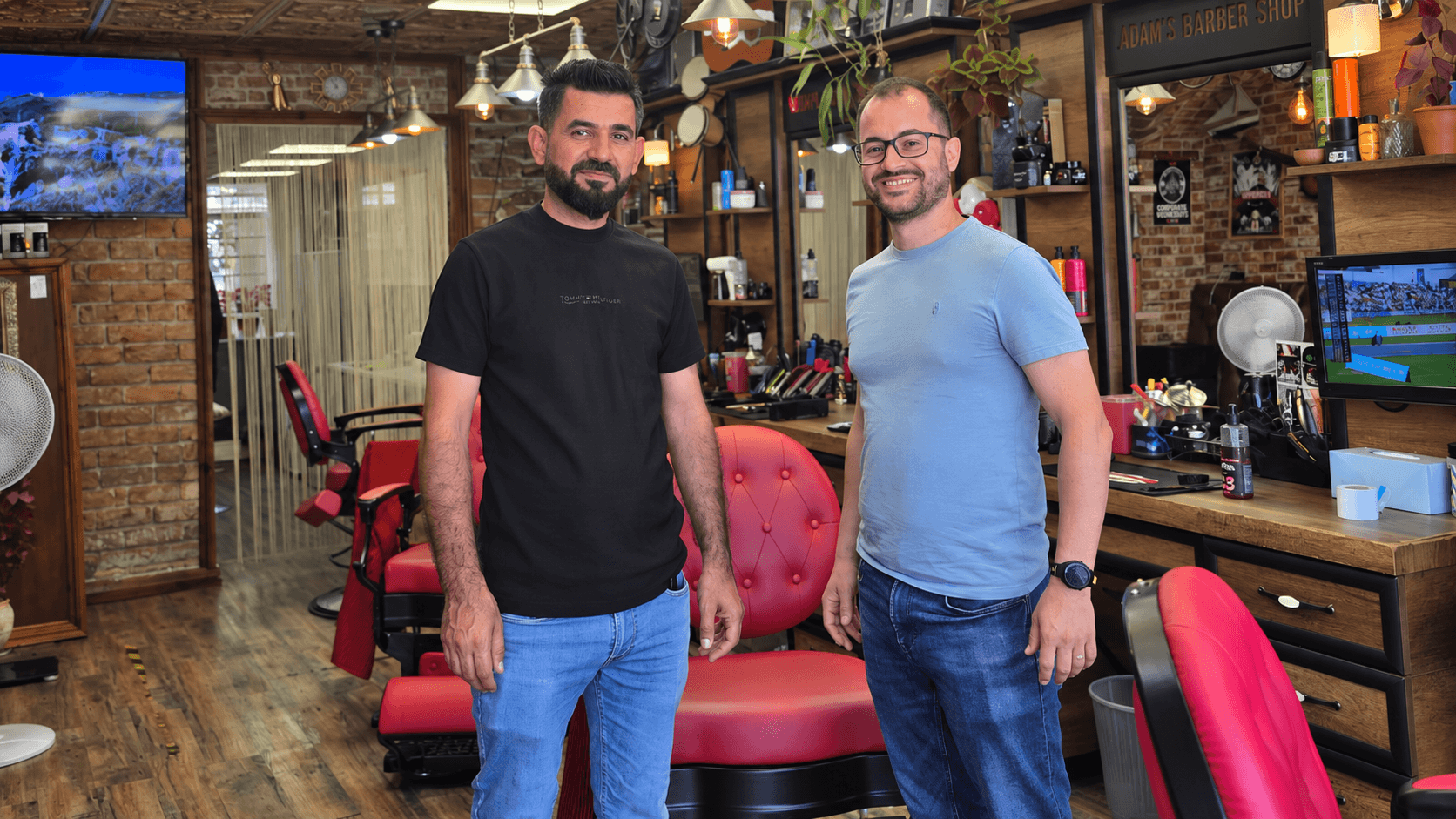
Sam, who runs Adam’s Barber Shop on Salisbury Road in Cardiff, kept coming back to some version of that question.
It was a fair one.
He already had a real business, loyal customers, strong word of mouth and a Google presence. Existing customers tend to come back. What he wanted more of was new people through the door.
So when I created an early WeGrow Presence site for Adam’s, the interesting question was never whether I could make a nicer-looking website.
It was whether that website could become a useful part of how new customers discover, understand and choose the shop.
Three months later, we have much better evidence than we did after the first few weeks.
We also have a much clearer understanding of what that evidence can — and cannot — tell us.
Adam’s did not need help keeping existing customers
One of the useful things about working directly with a local business owner is that you quickly discover which problems are real and which ones you have invented from behind a laptop.
Sam was clear about something early on.
Once people become customers, many of them come back.
Retention was not the problem he was asking me to solve.
The opportunity was discovery: helping more new people find Adam’s and decide to try it.
That shaped the website.
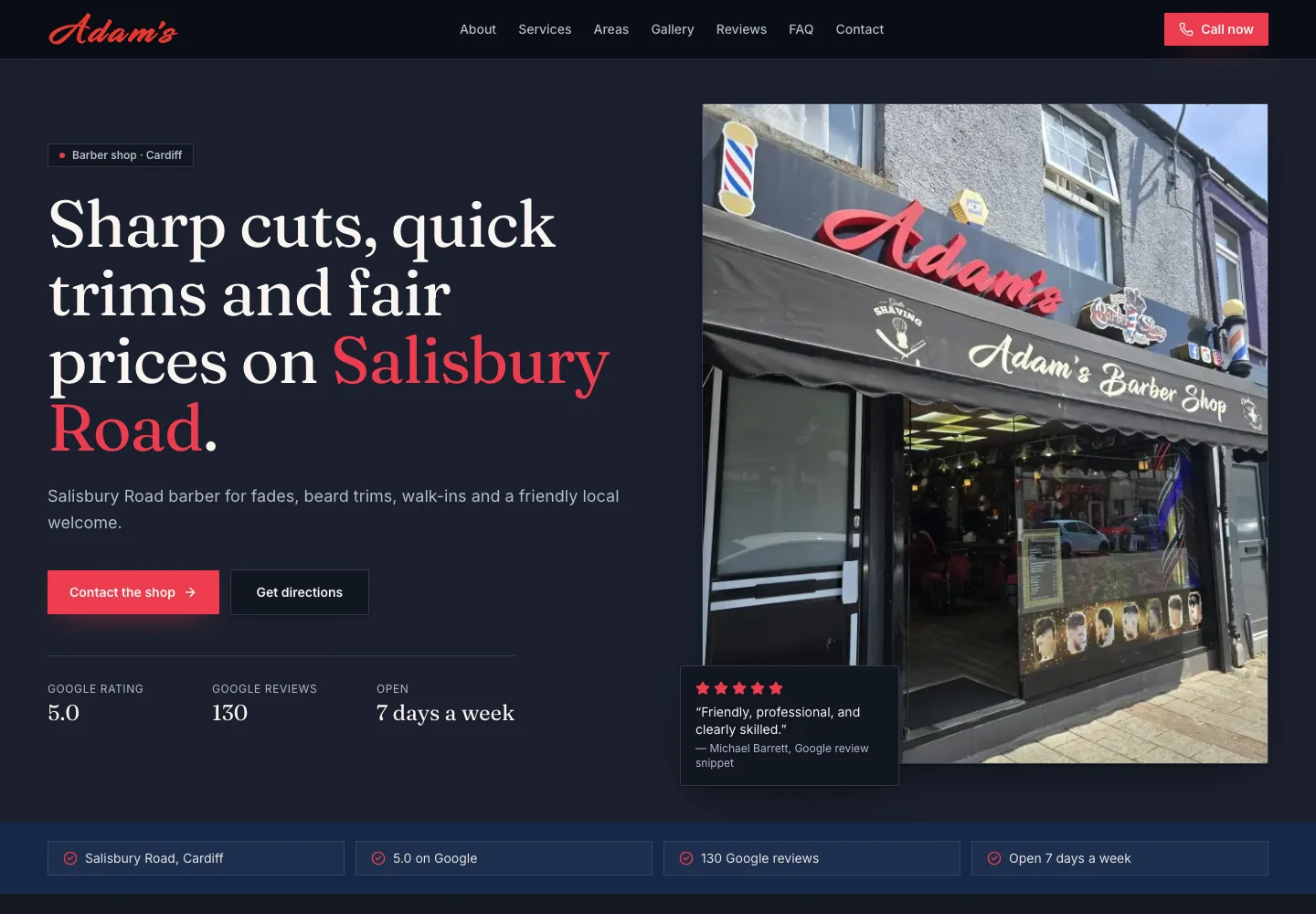
The page brought together the things a potential customer might want before choosing a barber: what the shop is like, services, opening hours, location, phone and WhatsApp routes, directions and useful links.
It also gave Adam’s one clear destination that could sit behind its existing Google and Instagram presence.
Then we started watching what happened.
Three months of Google Search visibility
By 29 September 2026, Google Search Console had recorded 61 search clicks and 2,697 impressions for the Adam’s Barber Shop page.
The monthly pattern is more interesting than the total.
The page recorded:
- 19 clicks and 213 impressions in the partial launch period in June;
- 19 clicks and 806 impressions in July;
- 7 clicks and 824 impressions in August;
- 16 clicks and 854 impressions in September.
One thing stands out immediately.
The number of times the page appeared in search results remained remarkably steady through the three full months.
July, August and September each produced more than 800 impressions.
The clicks moved around much more.
August was the obvious low point.
September then recovered.
If I looked only at the chart, I could easily start inventing explanations for that.
But this is where knowing the business matters.
A local chart needs local context
Sam had warned me more than once that summer is normally quiet for Adam’s.
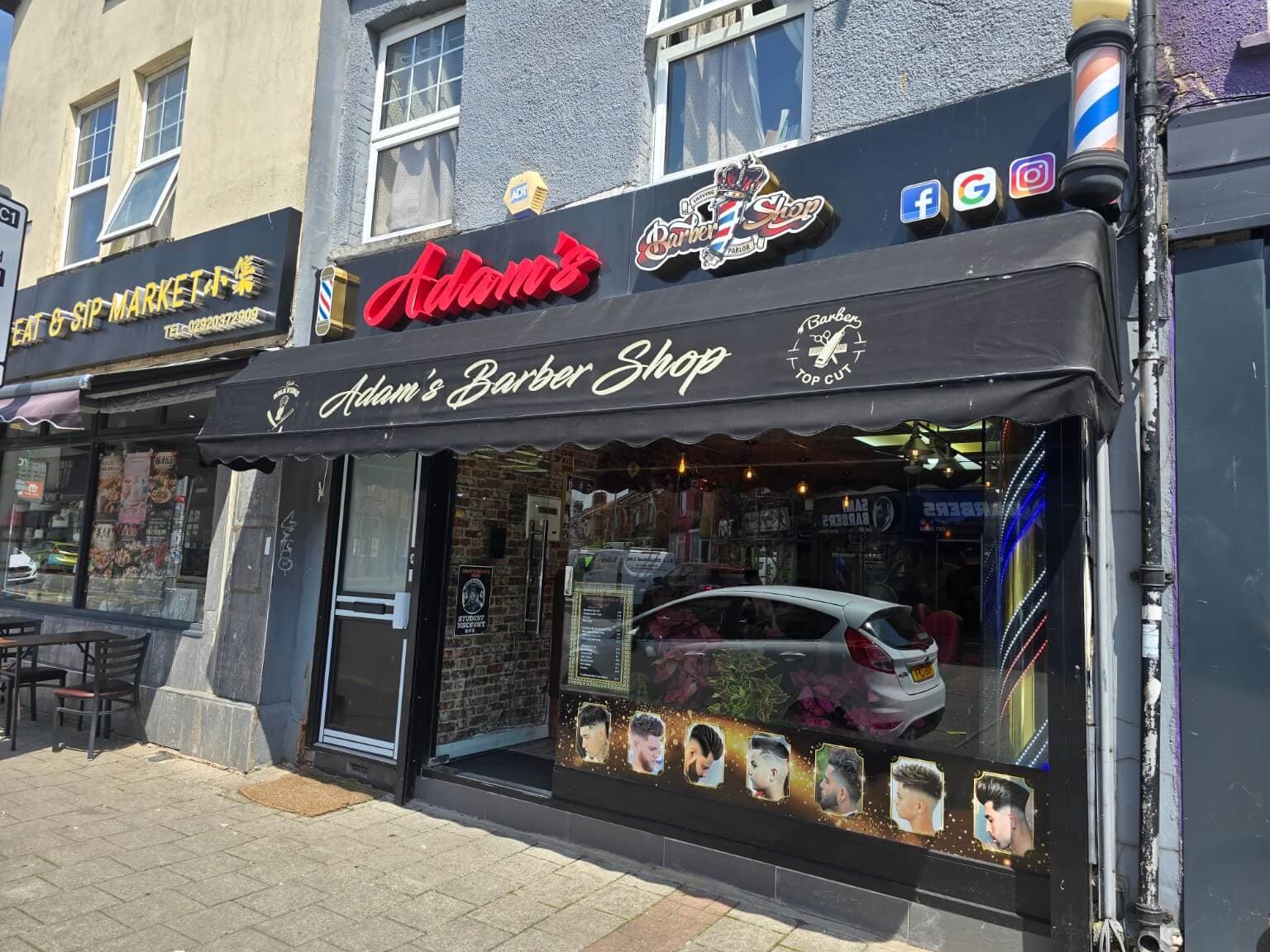
The shop is on Salisbury Road in an area with a large student population. Many of the people around the area leave Cardiff during the summer and return around late September and early October.
I live just around the corner on Richmond Road, so I see the same thing myself.
During summer, Salisbury Road and the surrounding streets can feel unusually empty. Then the students come back and the area suddenly feels alive again.
That does not prove that student seasonality caused Adam’s August search dip.
Google Search Console cannot tell us that.
But it does stop me drawing the opposite conclusion — that the website was somehow losing relevance because clicks fell for a month.
The timing is at least consistent with what Sam had already told me about his business.
August recorded seven search clicks.
September recovered to 16.
And eight of those 16 September clicks happened between 21 and 29 September, around the point when students were beginning to return to Cardiff.
I think there is a broader lesson in that.
Analytics rarely understand the physical place behind a local business.
The owner often does.
People were not only searching for Adam’s by name
Some of the search activity came from exactly the searches you would expect: people looking specifically for Adam’s Barber Shop.
That is useful.
Someone already aware of the shop still needs somewhere reliable to land when they search for it.
But the more interesting part for me is that Adam’s also appeared for generic barber searches.
Google’s visible query data includes searches such as:
barbers near me
barbers in cardiff
barbers cardiff
cardiff barbers
barber shops near me
best barbers cardiff
best barbers in cardiff
best barbers near me
top rated barbers cardiff
and cheap barber shops near me.
Several of those generic searches produced clicks.
That matters because Adam’s goal was attracting new customers.
Someone searching for Adam’s by name probably already knows something about the business.
Someone searching for barbers near me or best barbers cardiff may still be deciding where to go.
That does not mean every generic search click became a new customer.
It does mean the website had become a discovery surface for people who were not necessarily starting with Adam’s in mind.
Google also does not expose every individual query in Search Console, so those examples are only the searches we can see, not a complete reconstruction of all 61 clicks.
Search is only one layer
Search Console can tell me that somebody saw Adam’s in Google and clicked.
It cannot tell me what happened next.
That is why WeGrow also records a small set of anonymous website actions.
I deliberately do not treat these as leads or customers.
They are simply signals that somebody used a useful part of the website.
Looking at the cleaner recent 30-day window on 2 October, Adam’s had recorded 24 website-action events:
- 3 phone actions;
- 2 WhatsApp actions;
- 1 directions action;
- 3 direct-link actions;
- 9 contact-section actions;
- 6 offer-code reveals.
Those are not 24 known people.
There are no visitor IDs attached to these events, and one visitor can perform more than one action.
A click into the contact section also does not mean somebody contacted Adam’s.
But the categories still tell us something useful.
People were not only landing on the page and doing nothing.
They were using the routes the page was designed to make easier.
Then we tried something closer to the physical shop
On 20 September, we added an offer to the Adam’s website.
Instead of simply displaying the offer code immediately, the page lets someone choose to reveal it.
That gave us a slightly stronger intent signal to measure.
In the first 12 days, the site recorded six offer-code reveal events.
Again, I want to be precise about what that means.
It does not mean six people.
It does not mean six discounts were redeemed.
It does not mean six new customers walked into the shop.
The website only knows that the offer was deliberately revealed six times.
That is more interesting than a passive page view, but it still stops at the edge of the screen.
And then something happened offline.
A conversation I was not expecting
A colleague mentioned to me that he had recently gone to Adam’s for a haircut.
The conversation became quite funny because he did not know I had built Adam’s website.
A friend of his had received a discount at Adam’s and told him about it.
That was how my colleague became aware of the offer.
He then saw the offer on Adam’s website and went to the shop with his friend for a haircut.
I had not asked him about Adam’s.
He was not giving me feedback because he knew I was involved.
The story surfaced independently.
I find that much more interesting than another analytics number.
It gives us one real example where awareness of the offer and website formed part of the journey to an actual haircut.
It still does not let me say that the website generated six customers because it recorded six offer reveals.
It does not even prove the website alone caused my colleague to choose Adam’s. His friend was clearly part of that journey too.
But it does connect the online evidence to the physical business in a way the analytics cannot.
And for me, that is the point.
The awkward gap between evidence and attribution
By this stage, the Adam’s page had several positive signals.
It was appearing in Google consistently.
It was receiving clicks from both branded and generic barber searches.
People were using phone, WhatsApp, directions and other useful routes.
The new offer was being revealed.
And I now knew of at least one real haircut where the offer and website played a role.
Yet Sam’s original question still does not have a neat numerical answer.
Exactly how many paying customers did the website influence?
I do not know.
And I do not think pretending otherwise would make this a better case study.
A customer might:
- discover Adam’s through Google;
- look at the website;
- close it;
- walk past the shop two days later;
- recognise the name;
- ask a friend about it;
- return a week later for a haircut.
Another might see the Google Business Profile, click straight through to directions and never visit the website at all.
Someone else may see Adam’s on Instagram, visit the website, then WhatsApp.
Real customer journeys are messy.
The fact that analytics cannot perfectly assign credit does not make the website useless.
It means measurement and causality are different things.
What we can actually say
After roughly three months, I think the evidence supports several conclusions.
Adam’s website became visible for relevant searches and continued appearing consistently over time.
It received clicks from people searching generically for barbers in Cardiff, not only from people already typing the Adam’s name.
Visitors used practical actions including phone, WhatsApp, directions and useful links.
An offer added in September recorded six reveal events in its first 12 days.
And one independently surfaced real-world story connects awareness of that offer and website with an actual visit to the shop.
Those are meaningful signals.
They show that the page is participating in discovery and customer decision-making.
What they do not give us is a perfect conversion number.
What this evidence does not prove
The 61 Google Search clicks are not 61 customers.
The website actions are not unique people.
Six offer-code reveals are not six redemptions.
The August dip does not prove students leaving Cardiff caused the decline.
The September recovery does not prove students returning caused the increase.
The offer going live at roughly the same time does not mean it caused the recent activity either.
And one colleague getting a haircut does not establish a repeatable conversion rate.
We also cannot assign a specific amount of revenue to the website from the evidence we have.
Those limitations matter.
But they should not force us into the opposite mistake of pretending nothing useful happened because we cannot attribute every pound.
The lesson I took from Adam’s
When I started measuring local business websites, I instinctively wanted cleaner answers.
Clicks.
Actions.
Customers.
Revenue.
A tidy funnel from one to the next.
Adam’s made that harder.
It also made my thinking better.
The website exists inside a much bigger system: Google, Instagram, word of mouth, the street the business sits on, university seasons, friends recommending places to each other, people walking past, existing reputation and the quality of what happens when someone finally goes through the door.
The website does not deserve credit for all of that.
But it can still make part of that journey easier.
It can give Google a useful destination.
It can help somebody who has never heard of the shop understand it.
It can make calling, messaging or finding directions simpler.
It can carry an offer that gets talked about between friends.
And sometimes the strongest evidence appears in a conversation rather than an analytics dashboard.
Adam’s helped shape Presence too
The Adam’s page was one of WeGrow’s early founder-created Presence experiments.
The product has changed since then.
Today, Presence is a self-serve one-page website product at £19/month.
Owners manage their own business information through a focused editor rather than receiving a bespoke managed website as the standard product.
But many of the principles I learned from working closely with Sam remain inside it.
A local business website should make useful information clearer.
It should support the customer actions that genuinely fit the business.
And its value should not be exaggerated simply because analytics make certain numbers easy to count.
Human help is still available separately where it is useful.
The core product just no longer depends on me personally operating every website.
So what can a local business website actually prove?
Less than some marketing dashboards would have you believe.
But more than nothing.
Adam’s website can show that it has become visible for relevant searches.
It can show that people click through from Google.
It can record useful actions.
It can show that an offer has attracted deliberate interest.
And sometimes the real world gives us another piece of evidence — like a colleague casually telling me he saw the offer and went for a haircut without knowing I had anything to do with the website.
What I cannot honestly tell Sam is exactly how many customers the website created.
Maybe that answer becomes clearer with better experiments.
Maybe some of it will always remain messy.
Either way, I would rather understand that limitation than manufacture certainty around it.
The goal is not to make the analytics look impressive.
The goal is to make the website genuinely useful to the business.
And then keep listening to what happens outside the dashboard.
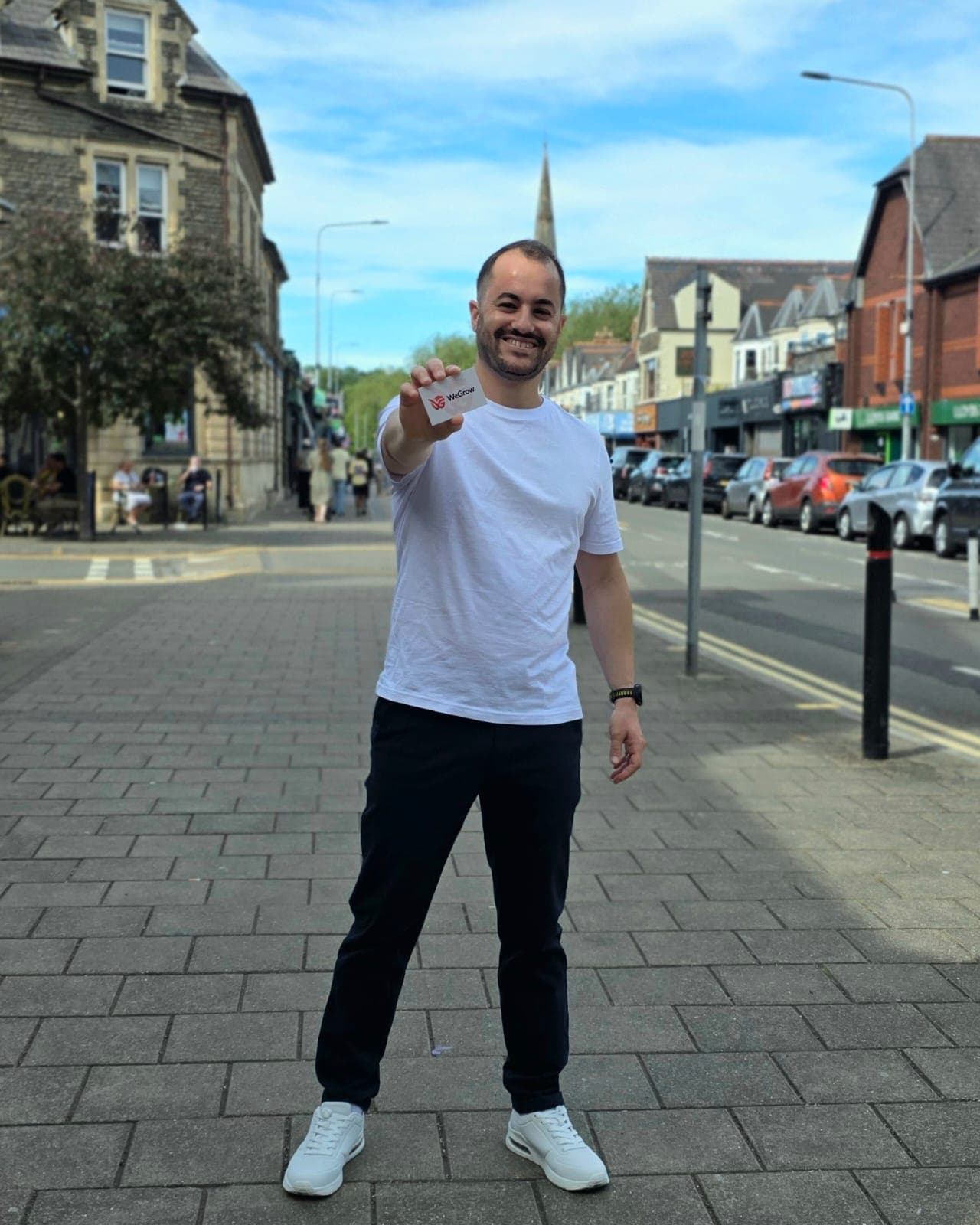
Jad El Omeiri is the founder of WeGrow. He has spent more than twelve years building digital products—from early-stage startups and marketplaces to ecommerce platforms used by millions of people. He now brings that experience into practical, founder-led work with independent businesses in Cardiff and beyond.